
A room for British polar exploration
This gallery traces two centuries of British polar exploration, from the search for the Northwest Passage to the early twentieth-century Antarctic expeditions led by figures such as Ernest Shackleton — a field where success and catastrophe have often sat very close together.
1. Two ships that mapped Antarctica
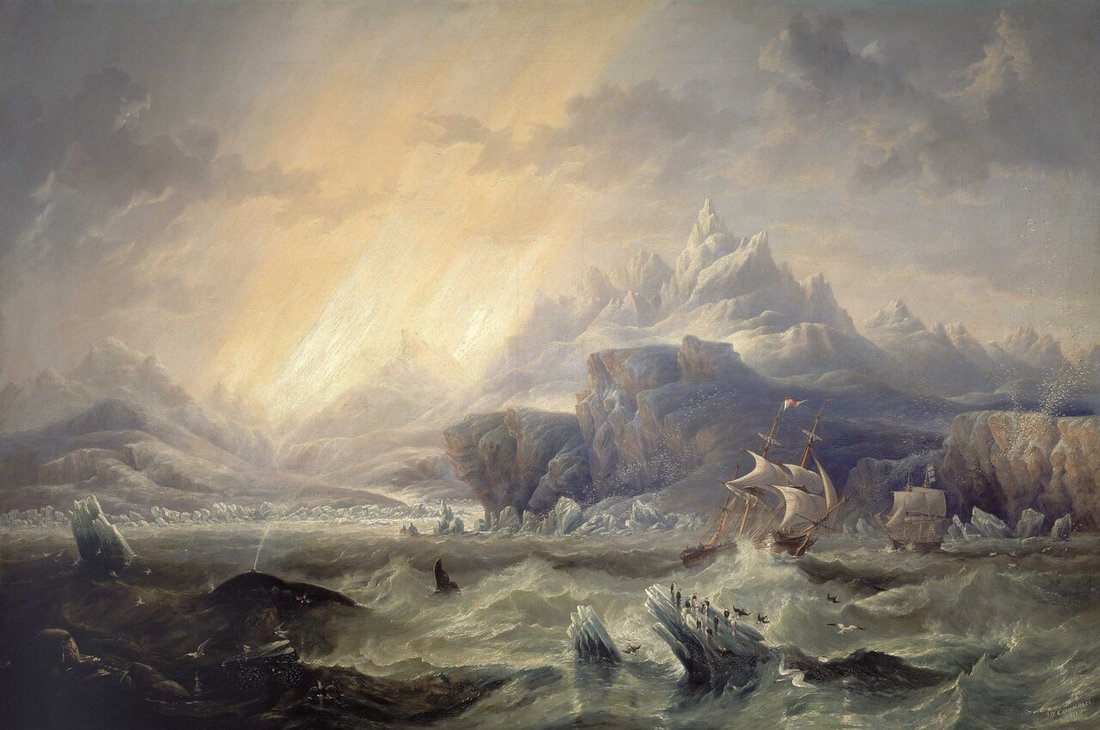
HMS Erebus and HMS Terror, two warships converted for polar exploration, took part between 1839 and 1843 in James Clark Ross's Antarctic expedition, which mapped much of the continent and gave its name to Mount Erebus. Before that, the Terror had already been through an ordeal: on an Arctic voyage in 1836-1837 under Captain George Back, the ship was trapped in pack ice for 118 days at the entrance to Foxe Channel, drifting nearly 200 miles before being freed, badly damaged.
2. Lost with all hands, found again 170 years later
In 1845 the two ships set out again, under Sir John Franklin, in search of the Northwest Passage — and vanished along with their 129 crew. Abandoned in the ice in 1848 after Franklin himself died at sea, no survivors were ever found; analysis of human remains discovered later suggests some expedition members resorted to cannibalism in their final months.
It would take until 2014 for the wreck of the Erebus to be located, and 2016 for the Terror's — nearly 170 years after they disappeared, thanks in part to information passed down through generations of Inuit who had knowledge of the wreck.
How much time
The same two ships' names recur from one painting to the next: follow them to trace their path from Antarctic triumph to Arctic tragedy.
- The paintings linked to Erebus and Terror — 12 minutes.
- The rest of the room (Shackleton, Ross) — 10 minutes.
Sources and verification
Checked against the official notices of Royal Museums Greenwich (rmg.co.uk / collections.rmg.co.uk) and cross-checked with Wikipedia EN/FR.
- Royal Museums Greenwich — HMS Terror and Erebus: the story of Franklin's lost expedition
- Royal Museums Greenwich — 'Perilous position of H.M.S. Terror, Captain Back, in the Arctic Regions in the summer of 1837'
- Wikipedia EN — Wrecks of HMS Erebus and HMS Terror National Historic Site
- Royal Museums Greenwich — 'Erebus' and 'Terror' in the Antarctic
Displays and room openings can change. Check the Royal Museums Greenwich website on the day of your visit before following a route.
Continue your visit
Royal Museums Greenwich, London
Listen to the commentary in the gallery
This route gives you a thread to follow. In front of an artwork, CulturAll adds the audio commentary: photograph the work or its label, listen, then ask your questions.